
When Busyness Becomes a Coping Strategy

In recent conversations with internationals navigating work and transition in the Netherlands, one pattern has quietly repeated itself.
People are constantly working.
They apply to roles every day, adjust their CVs, take additional courses, practice Dutch whenever possible, and try to improve something continuously. Even moments that could be rest often turn into preparation for the next opportunity.
From the outside, this looks like ambition and discipline. And in many cases, it is.
But there is often another layer underneath.
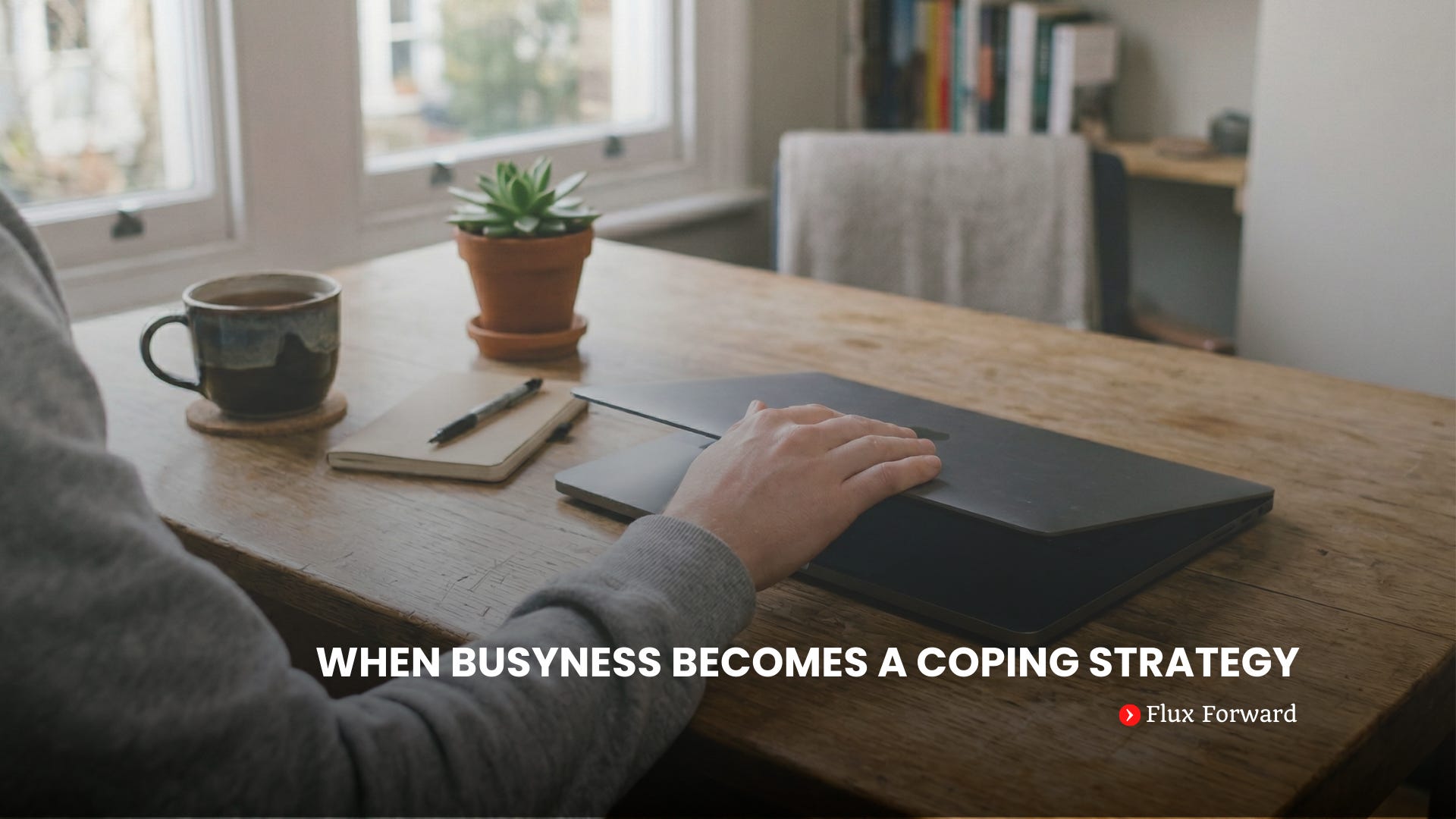
When your right to stay depends on progress, when savings are limited, when you feel that you have to prove yourself again in a new system, slowing down does not feel neutral. It feels risky. Pausing can feel irresponsible. Rest can feel like falling behind.
In that context, busyness becomes a way to manage uncertainty. Doing more creates a sense of movement, even when outcomes remain unpredictable.
This does not mean internationals lack resilience. If anything, the opposite is true. Many are carrying a high level of responsibility while navigating structural complexity that is largely invisible from the outside.
The issue is not effort. The issue is direction.
Constant motion can easily become reactive rather than strategic. Applications are sent, courses are taken, new skills are added, but without a clear sense of what actually moves the needle. Over time, this creates exhaustion without clarity.
Recognizing this dynamic matters because sustainable contribution requires more than continuous output. It requires stability, reflection, and aligned action.
At Flux Forward, we often encourage small structural shifts when things start to feel reactive instead of intentional.
One is to define what progress means for the next two weeks. Not everything at once. One clear objective that genuinely improves positioning or direction.
Another is to separate “application time” from “direction time.” Sending CVs is operational. Thinking about long-term positioning, narrative, and network strategy is strategic. Both matter, but they require different mental states and should not be blended into constant urgency.
A third is to treat recovery as a structural necessity rather than a reward after exhaustion. Clarity rarely emerges in a permanently activated state.
None of these suggestions remove systemic friction. Visa structures, labor market realities, and integration gaps are real. But without internal structure, external pressure quickly turns into overextension.
Activation is not about doing more. It is about directing effort in a way that builds stability over time.
And sometimes the most strategic move is not acceleration, but alignment.
If you’re navigating something similar, you don’t have to figure it out alone.
You can book a 30-min Direction Session 👉 here